Conscious Profitability
Can Conscious Leadership Really Drive Business Profitability?
What if profitability is not only about what a business does, but also about how its leaders think, decide and behave?
We often connect business success with strategy, sales, technology, financial discipline and execution. These things clearly matter. But there is another factor that can influence all of them: the quality of leadership behind the decisions.
This raises an important question: Can conscious leadership really drive business profitability?
At first, consciousness and profitability may sound like two very different ideas. One seems personal and human. The other sounds financial and measurable. But they do not necessarily have to compete with each other.
When leaders become more aware of their values, decisions and behaviour, the way they lead can change. Relationships can become stronger. Trust can grow. Decisions can become more thoughtful. And when these things improve, business performance can benefit too.
This is the idea behind Conscious Profitability: consciousness shapes the quality of decisions, while profitability becomes one of the outcomes of those decisions.
What Does Conscious Leadership Actually Mean?
Conscious leadership is not simply about being kind, positive or emotionally intelligent.
It is about being aware of what is happening inside you before you act outside.
A conscious leader notices what drives a decision. They understand their values. They recognise how pressure affects their behaviour. They can question their own assumptions and think beyond the immediate result.
That matters because leadership is tested when decisions become difficult.
What happens when telling the truth could cost you a deal? What happens when a team member makes a serious mistake? What happens when patience feels impossible because everyone wants an immediate answer? What happens when the profitable decision today could damage a relationship tomorrow?
These moments reveal whether values are genuinely part of leadership or simply words.
This is closely connected to the idea of the Inner Operating System—the invisible layer of beliefs, values and thinking patterns that sits beneath visible decisions and results.A Living Example of Values in Leadership
A recent reflection by Sandeep Amar Guppta began with a question he is asked repeatedly: can consciousness and profitability really work together?
Instead of answering only through a theory, he shared a real-life example.
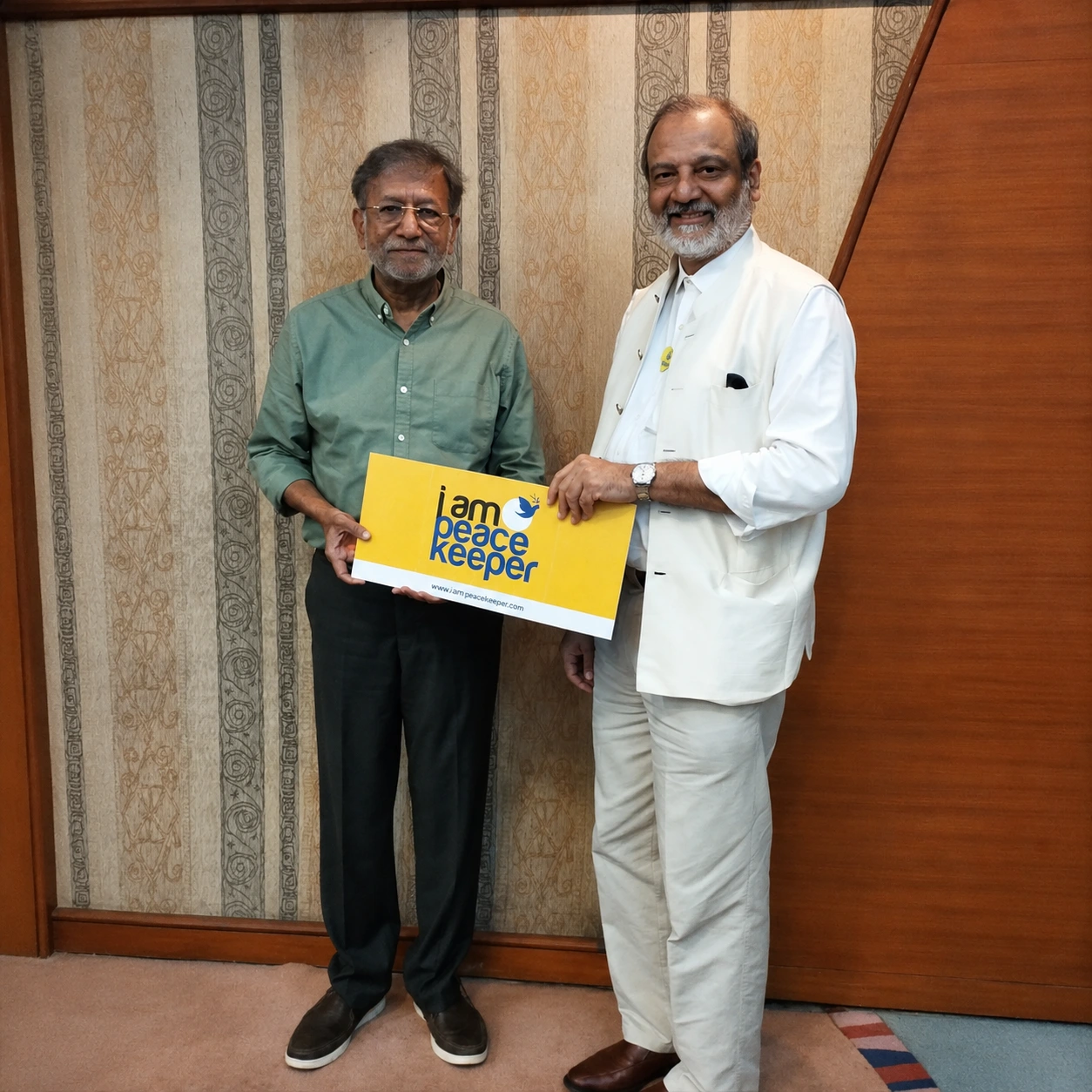
Sandeep Amar Guppta had the opportunity to meet Dr. Huzaifa Khorakiwala of the Wockhardt family. Around the same time, he became part of the I Am Peacekeeper Movement, a movement conceived and nurtured by Dr. Khorakiwala.
The movement is built around seven timeless human values:
Truth. Gratitude. Forgiveness. Love. Humility. Giving. Patience.
The interesting part is not simply the list. Many people can talk about values. Many can write about them. Many can even teach them. The more difficult question is whether those values can actually be seen in the way someone lives, communicates and makes decisions.
That was what stood out to Sandeep Amar Guppta. As he reflected on his meeting with Dr. Huzaifa Khorakiwala, the values appeared not just as ideas but as something visible in his purpose, conversations, decisions and actions. You can read the original LinkedIn reflection by Sandeep Amar Guppta.
That difference matters enormously in business. A value written on a wall does not change a company. A value lived consistently by its leaders can.
Seven Values, Seven Leadership Lessons
The seven values connected with the I Am Peacekeeper Movement also offer useful lessons for business leaders.